In paddlesports, whether it’s sea kayaking, white water, open boating, SUP or all the flavours in between, there’s a question I sometimes ask myself: why do we seek out coaching? Myself included.
The obvious answer is that we want to improve, or test ourselves somewhere more challenging. That’s certainly part of it. But I think there’s usually more going on, for coach and student alike, and some of it we haven’t recognised or acknowledged. That thinking is influenced by the Johari Window (Luft & Ingham, 1955), a psychology model about what we do and don’t know about ourselves. Digging a little deeper helps a session deliver more lasting success.
The why
In coaching we talk about TTPP-EE: technical, tactical, psychological, physical, environment and equipment. On the surface the reasons are often clear: “I want to run Grade 4 rapids” or “I want to improve my forward paddling.”
Other reasons are less obvious. We carry our past experiences with us, and the the daily grind of adulting can spill over onto a day on the water. You might want to feel like the paddler you were a few years ago. You might want an adrenaline rush you don’t get day to day, to meet like-minded people, or just to switch off and reset. Often it’s a mix.
Ask yourself: What am I really hoping to get from this day on the water?
Defining success
Defining success plus goal setting gives you a better chance of a good day. Some goals are short and simple: have fun, go faster, roll five times. These are SMART goals (Doran, 1981). Others are woollier and harder to measure: letting go of a bad experience, getting the fun back, making your own decisions about, route choice, line choice or safety.
Your reasons are unique to you, and they can shift over time, even during a session.
Ask yourself: What would really make this a successful day for me? Is it something I could measure, or something I’d just know when I felt it?
Challenge by choice
Being a student means having a say. This idea is often called challenge by choice, from outdoor education: you decide how far to push. TTPP can help you think about it. Technical might be rolling or turning. Tactical is choosing the right stroke and being efficient. Psychological covers fear, nerves and past experiences. Physical might be coping with tide rates, wind speeds, wave heights or surf landings.
Ask yourself: Where do I want to be stretched, and what is ok to leave alone for now?
Stages of learning
It also helps to know how learning feels. Fitts and Posner (1967) described three stages. As a beginner you’re cognitive: overthinking and quite slow. Then you work through the associative stage, practising and refining. Finally comes the autonomous stage, where things happen seamlessly without thought. Wherever you are, it’s a normal place to be.
This isn’t just for paddlers. If you’re a newer coach, you’ll know the feeling: thinking hard about what to say, what to watch for and when to step in, while it all feels clunky. That’s the cognitive stage too, and it passes with practice.
Ask yourself: Which stage am I at with the skill I’m working on, and am I being patient with myself?
Want to explore this on the water?
If any of these questions made you stop and think, that’s exactly where I like to start a session. Get in touch at seakayakalice.co.uk and we’ll talk about what success looks like for you.
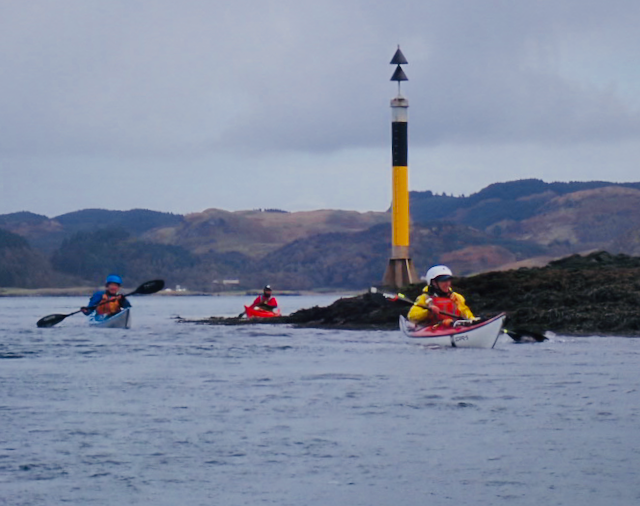
Every paddler has their own goals.